
Blog ·
What we faced making an indie roguelike: testers, balance and co-op bugs
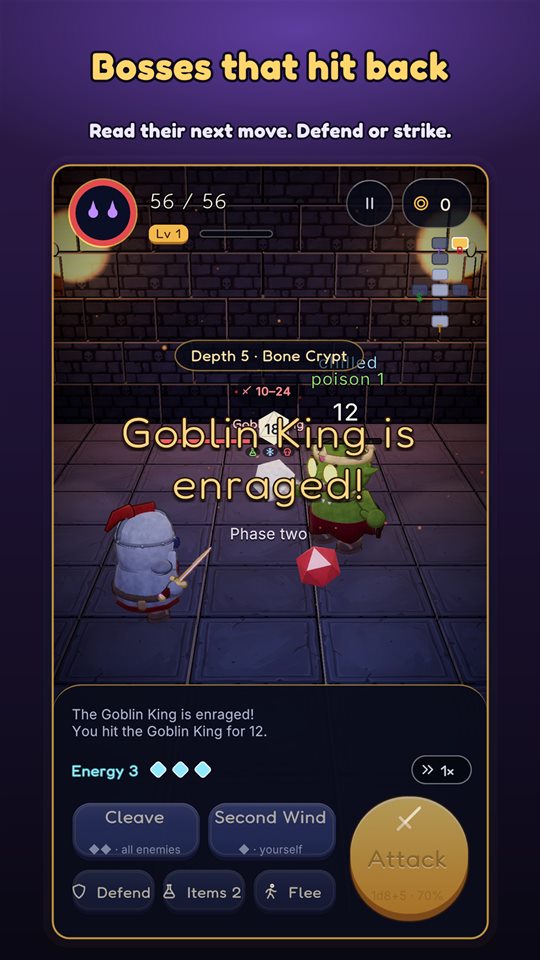
Building Depthbound was less about code than about problems nobody warns you about. Here are the biggest ones, and what solved them.
1. Finding twelve testers
A new Google Play developer has to run a closed test with at least twelve testers for fourteen days before releasing. For a solo developer with no audience, that was the biggest wall. After the first days of daily posts, the website had two sign-ups.
What worked: making joining dead simple. The sign-up form went away and was replaced by two taps: join a Google Group, then press the Play opt-in link. Tester-swap communities on Reddit helped too, where developers test each other's apps. Within days twenty testers were in.
Lesson: every extra step in a sign-up costs you most of the people who started it.
2. Making a game hard, but fair
Depthbound is meant to be hard. Pressing Attack every turn must fail, and good loot must come slowly. But "hard" is easy to get wrong: too harsh and nobody comes back, too soft and nothing matters.
To tune it, the game has bots: simulated players that dive hundreds of floors at high speed in three styles, a spammer who only attacks, a casual player and a smart one. The smart bot asks the game what each action would do and picks the best. When a change lands, the bots show where the spammer and the smart bot die. The target: the spammer dies around depth 3, the smart bot reaches depth 4 to 6.
Players taught the rest: bosses felt too easy once you had strong skills, so relics became rare and the gambles got costs. And deaths now show the last blow, because a death you understand feels fair.
3. The co-op soft-lock
The first real co-op dive got stuck. A player who took over a fight waited 45 seconds after every turn, and a leader who fell stayed standing on everyone else's screen. Phones lose messages, drop out and come back. The fix was a set of rules: every message is confirmed and resent, a watchdog hands the fight to someone else when a phone goes silent, and a player who drops out can rejoin the same fight.
4. A UI that looked machine-made
The first interface was flat panels and neon outlines, and it looked generic. Noise textures and text on bare wood were tried and rejected. What finally worked was to model the UI like the game's props: planks for every sheet, paper pages pinned on top so text stays readable, wooden plaques as buttons and oak medallions as round buttons.
5. Getting seen
The last problem is still open: getting people to find the game. Short clips that ask the viewer to decide something ("attack or defend?") do far better than plain gameplay. If you want to help, the best thing you can do is play, and tell us what killed you.
Play Depthbound free on Google Play · How the art and sound were made
Questions, deaths, ideas? Join the Depthbound Discord.